Tuesday, April 4, 2023

the business includes IT


When you use the word “customer,” do you mean an internal customer — someone who works for the same company that you do and who uses the technology IT provides? That’s a mistake, many experts believe. “The most significant thing CIOs get wrong about business-IT alignment is servicing other departments’ ‘internal customers,’ instead of the true business customer needs,” says Phil Pettinato, CTO of Versapay. “The CIO should push to transform processes so the internal stakeholders can create better customer experiences for the primary customer.”

Because, of course, external customers are your company’s customers, and that makes them your customers, too. Thinking of internal users as customers creates a division between business and IT that can undermine your efforts to create alignment. “I don’t believe there’s IT and the business,” says James Anderson, a vice president and analyst at Gartner. “The business includes IT. And your product is not IT, it’s the services enabled by IT that are used for business outcomes.”


he doesn’t have a desk


When New York-Presbyterian CIO Daniel Barchi arrives at work in the morning, he doesn’t sit down at his desk. That’s because he doesn’t have a desk — or an office — of his own. “I guide a very, very large team of IT people, but I don’t have one office where I go every day,” he says.

Instead, Barchi may spend the day working in the building that houses the company’s back-office systems. Or he may spend the day in one of its hospitals, meeting with executives or doing a walkthrough. Every day is different, and that’s the point, he says. “You can’t understand the needs of the clinicians unless you are meeting with them.”

Not every CIO can or should give up their own office, he adds. But his choice to do so reflects an inescapable fact: “The technology can work, but unless it works well for users in their environment, it’s not meeting their needs.”


name it to tame it


Name It to Tame It is a technique that involves noticing and labeling emotions as they’re happening. Identifying an intense emotion (“naming”) has the effect of reducing the stress and anxiety (“taming”) in the brain and the body that that emotion is causing.

In addition to in-the-moment relief, this practice also strengthens our capacity over time to be with big emotions when they arise, without getting swept up in them.

This technique was first identified by Dr. Daniel Siegel, a psychiatrist, writer, and professor who is also the founding co-director of the Mindful Awareness Research Center at UCLA...

Practicing this technique effectively involves being aware of your body, speaking compassionately to yourself, and using deep, slow breathing.

When you think of a typical cycle of reactive thoughts, it might go like this:

  1. Something happens
  2. Your body responds: tension, rapid heart rate, faster breathing
  3. You might have thoughts like, “This is unbelievable!” / “How could they do this?” / “This isn't fair!”
  4. You feel angry, frustrated, rejected, humiliated, afraid, etc.
  5. If you’re trying to stop or deny the emotion, you might speak to yourself in reprimanding ways: “What’s wrong with you?” / “Get ahold of yourself!”—which doesn’t work
  6. Your body responds with more tension and stress hormones
  7. You act out physically or have an emotional outburst
To gently interrupt this cycle, you initiate Name It to Tame It right after you notice your body’s first response. It might look like this:

  1. You notice what your body is telling you: that you’re feeling angry, afraid, sad, etc.—and you take a deep, slow breath in
  2. You recognize the fact that this situation is upsetting you—without reprimanding yourself—and you slowly exhale
  3. You honestly name what you’re feeling: e.g., “anger, anger, anger” or “fear, fear, fear”—and you take a deep, slow breath in
  4. Your notice your body slowly calming itself—and you exhale
  5. You keep naming and breathing until you feel your body regulating
Naming the emotions creates a kind of healthy distance between you and the reaction. You recognize an important truth: you’re experiencing an emotion, but you aren’t caught up in or controlled by it.


"Name It to Tame It: Label Your Emotions to Overcome Negative Thoughts," by Mindfulness.com. Accessed on April 4, 2023

Thursday, March 16, 2023

after reading over 200 self-improvement books


After reading over 200 self-improvement books over the past thirty years I have determined all self-improvement and success come down to five keystone lessons that all other principles rest upon.

  1. Mindset determines your success.
  2. Goals create the map to your success.
  3. Modeling shows what leads to success. 
  4. Systems create the path to your success. 
  5. Perseverance makes you successful.
...To succeed in life, you must develop a positive and growth-oriented mindset that allows you to overcome challenges and learn from your mistakes. You should set realistic and achievable goals that are specific, measurable, achievable, relevant and time-bound. You must create a system of processes, routines, and habits that help you consistently and efficiently move closer to achieving your goals. Finally, you must cultivate the habit of perseverance, which enables you to keep going even when things get tough and never give up on your goals. This is what 200 self-help books will teach you.


Wednesday, March 15, 2023

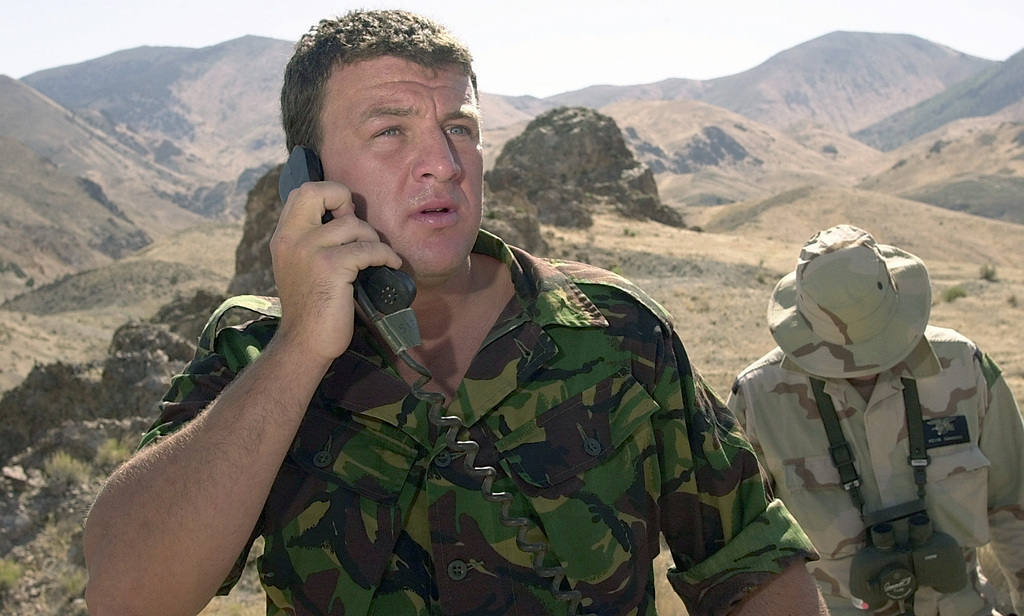
who dares wins

Throughout my career, I always had great respect for the British Special Air Service, the famed SAS. The SAS motto was "Who Dares Wins." The motto was so widely admired that even moments before the bin Laden raid, my Command Sergeant Major, Chris Faris, quoted it to the SEALs preparing for the mission. To me the motto was more than about how the British special forces operated as a unit; it was about how each of us should approach our lives.

Life is a struggle and the potential for failure is ever present, but those who live in fear of failure or hardship, or embarrassment will never achieve their potential. Without pushing your limits, without occasionally sliding down the rope headfirst, without daring greatly, you will never know what is truly possible in your life. 


Admiral William H. McRaven (U.S. Navy Retired)

Make Your Bed: Little Things That Can Change Your Life... and Maybe the World. Grand Central Publishing. 2017. p.63