Tuesday, April 4, 2023

name it to tame it


Name It to Tame It is a technique that involves noticing and labeling emotions as they’re happening. Identifying an intense emotion (“naming”) has the effect of reducing the stress and anxiety (“taming”) in the brain and the body that that emotion is causing.

In addition to in-the-moment relief, this practice also strengthens our capacity over time to be with big emotions when they arise, without getting swept up in them.

This technique was first identified by Dr. Daniel Siegel, a psychiatrist, writer, and professor who is also the founding co-director of the Mindful Awareness Research Center at UCLA...

Practicing this technique effectively involves being aware of your body, speaking compassionately to yourself, and using deep, slow breathing.

When you think of a typical cycle of reactive thoughts, it might go like this:

  1. Something happens
  2. Your body responds: tension, rapid heart rate, faster breathing
  3. You might have thoughts like, “This is unbelievable!” / “How could they do this?” / “This isn't fair!”
  4. You feel angry, frustrated, rejected, humiliated, afraid, etc.
  5. If you’re trying to stop or deny the emotion, you might speak to yourself in reprimanding ways: “What’s wrong with you?” / “Get ahold of yourself!”—which doesn’t work
  6. Your body responds with more tension and stress hormones
  7. You act out physically or have an emotional outburst
To gently interrupt this cycle, you initiate Name It to Tame It right after you notice your body’s first response. It might look like this:

  1. You notice what your body is telling you: that you’re feeling angry, afraid, sad, etc.—and you take a deep, slow breath in
  2. You recognize the fact that this situation is upsetting you—without reprimanding yourself—and you slowly exhale
  3. You honestly name what you’re feeling: e.g., “anger, anger, anger” or “fear, fear, fear”—and you take a deep, slow breath in
  4. Your notice your body slowly calming itself—and you exhale
  5. You keep naming and breathing until you feel your body regulating
Naming the emotions creates a kind of healthy distance between you and the reaction. You recognize an important truth: you’re experiencing an emotion, but you aren’t caught up in or controlled by it.


"Name It to Tame It: Label Your Emotions to Overcome Negative Thoughts," by Mindfulness.com. Accessed on April 4, 2023

Thursday, March 16, 2023

after reading over 200 self-improvement books


After reading over 200 self-improvement books over the past thirty years I have determined all self-improvement and success come down to five keystone lessons that all other principles rest upon.

  1. Mindset determines your success.
  2. Goals create the map to your success.
  3. Modeling shows what leads to success. 
  4. Systems create the path to your success. 
  5. Perseverance makes you successful.
...To succeed in life, you must develop a positive and growth-oriented mindset that allows you to overcome challenges and learn from your mistakes. You should set realistic and achievable goals that are specific, measurable, achievable, relevant and time-bound. You must create a system of processes, routines, and habits that help you consistently and efficiently move closer to achieving your goals. Finally, you must cultivate the habit of perseverance, which enables you to keep going even when things get tough and never give up on your goals. This is what 200 self-help books will teach you.


Wednesday, March 15, 2023

who dares wins

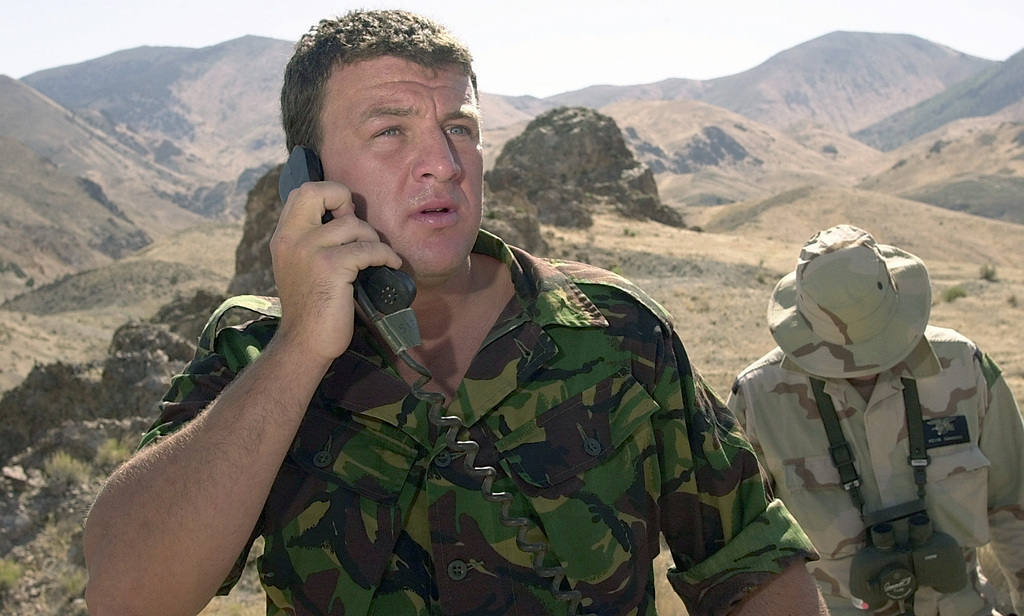
Throughout my career, I always had great respect for the British Special Air Service, the famed SAS. The SAS motto was "Who Dares Wins." The motto was so widely admired that even moments before the bin Laden raid, my Command Sergeant Major, Chris Faris, quoted it to the SEALs preparing for the mission. To me the motto was more than about how the British special forces operated as a unit; it was about how each of us should approach our lives.

Life is a struggle and the potential for failure is ever present, but those who live in fear of failure or hardship, or embarrassment will never achieve their potential. Without pushing your limits, without occasionally sliding down the rope headfirst, without daring greatly, you will never know what is truly possible in your life. 


Admiral William H. McRaven (U.S. Navy Retired)

Make Your Bed: Little Things That Can Change Your Life... and Maybe the World. Grand Central Publishing. 2017. p.63

Tuesday, March 14, 2023

frightened of change?


Frightened of change? But what can exist without it? What’s closer to nature’s heart? Can you take a hot bath and leave the firewood as it was? Eat food without transforming it? Can any vital process take place without something being changed? 

Can’t you see? It’s just the same with you – and just as vital to nature.


Marcus Aurelius

Monday, March 13, 2023

mirrored reciprocation


Peter Kaufman, editor of Poor Charlie's Almanak, wanted to understand "how everything in the world works." Normally, such a lofty goal would be overwhelming, even laughable. Most of us would give up such a quest before it had even begun. So he found a short-cut. Over a six-month period, he read the condensed interview at the end of every copy of Discover magazine ever published online: 144 interviews in all. Each was a short but high-quality summary of some aspect of science, written for a lay audience, with clear examples, engaging stories, and concise language. 

He soon found he could separate everything he was learning into three buckets of data. bucket one was the oldest and largest data set: the inorganic universe. It was physics and geology, covering the more than thirteen billion years since the dawn of the universe. bucket two was biology, everything alive on planet Earth. That covered about three billion years. Bucket three was the whole of human history: the relatively short period we have been around as a species. 

Then he looked for commonalities: principles that could explain how things worked consistently, across all three buckets. 

In bucket one he found Newton's Third Law of Motion: for every action, there is an equal and opposite reaction. In other words, the more force you exert on something, the more force that thing exerts back. In bucket two he found Mark Twain's example of what happens if you pick up a cat by its tail: it will attack you. In bucket 3 he found something similar: how we treat other people is how they will treat us back. 

The commonality was a principle that he dubbed "mirrored reciprocation," or, in simpler terms, "You get what you give." Just think of all the ways we can apply that principle! Send a thank-you note, and you will get one back. Smile sincerely at someone, and they will smile back at you. Offer information to someone in a conversation, and they will tend to share information with you in return. 

In one experiment investigating the principle of mirrored reciprocation, a researcher sent handwritten Christmas cards to almost six hundred complete strangers. Each card included a not and a photograph of his family. It didn't take long before these complete strangers started sending responses. In all he received close to two hundred cards in reply.


Greg McKeown

Effortless: Make it Easier to do what Matters Most. By Greg McKeownRandom House. 2021. p. 157, 158. See also "The Multidisciplinary Approach to Thinking" by Peter Kaufman.